
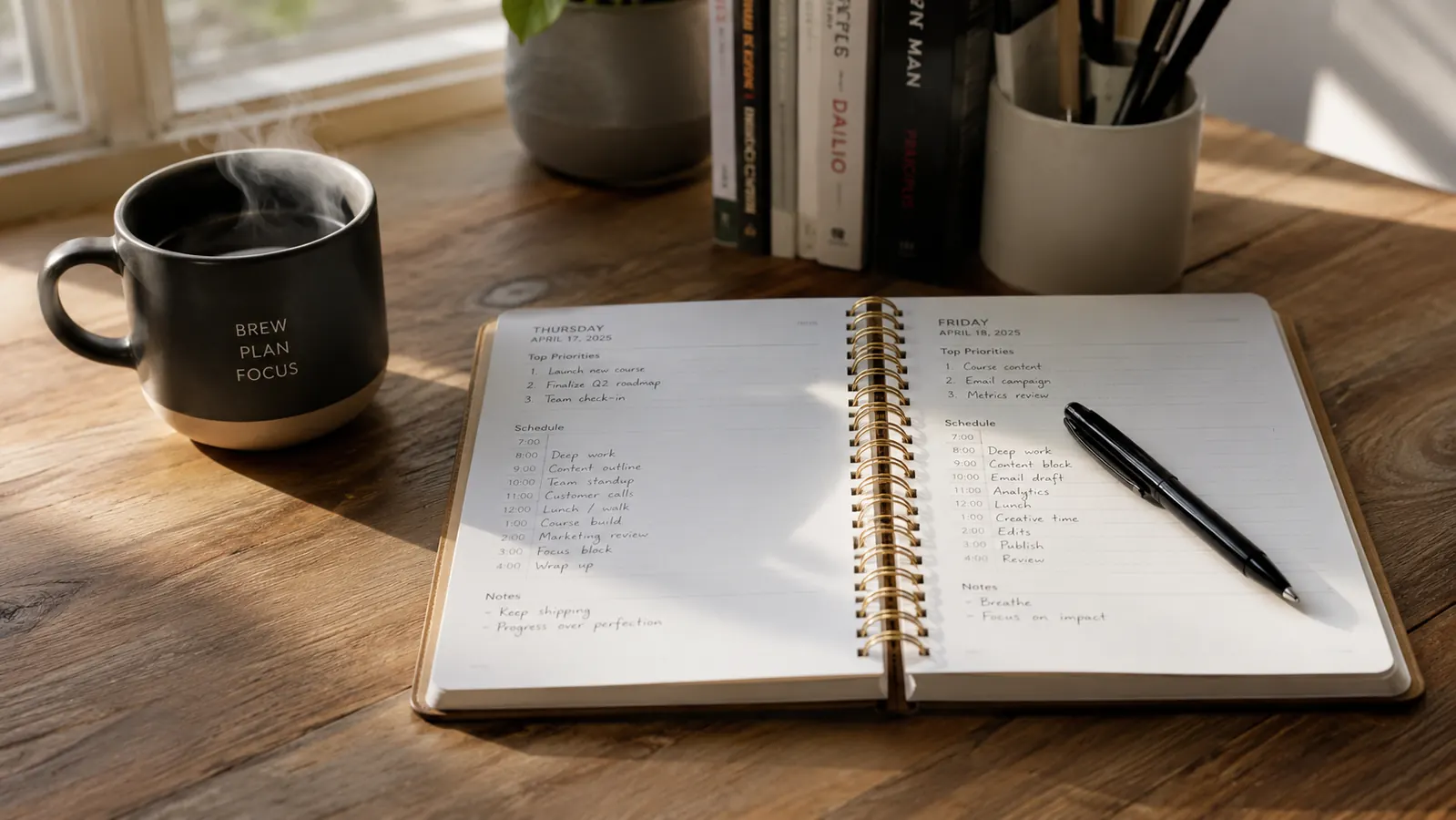
About fourteen months ago I was running my consulting business off a combination of a whiteboard, three different apps, and a mental to-do list that I was constantly rebuilding from scratch every morning. I told myself I was organized. I was not. I was spending the first thirty minutes of every day figuring out what I was supposed to be doing, and I was ending most Fridays with four or five important things that had rolled over untouched. The Anecdote Daily Planner was not the first thing I tried to fix this. It was just the first thing that worked.
A client of mine mentioned it during a call. He runs a small logistics company, manages a team of eleven, and is the kind of guy who gets more done before 9 a.m. than most people do all day. He said he had been using it for about three months and that the one-page-per-day format forced him to stop treating every task as equally urgent. I ordered it that afternoon.
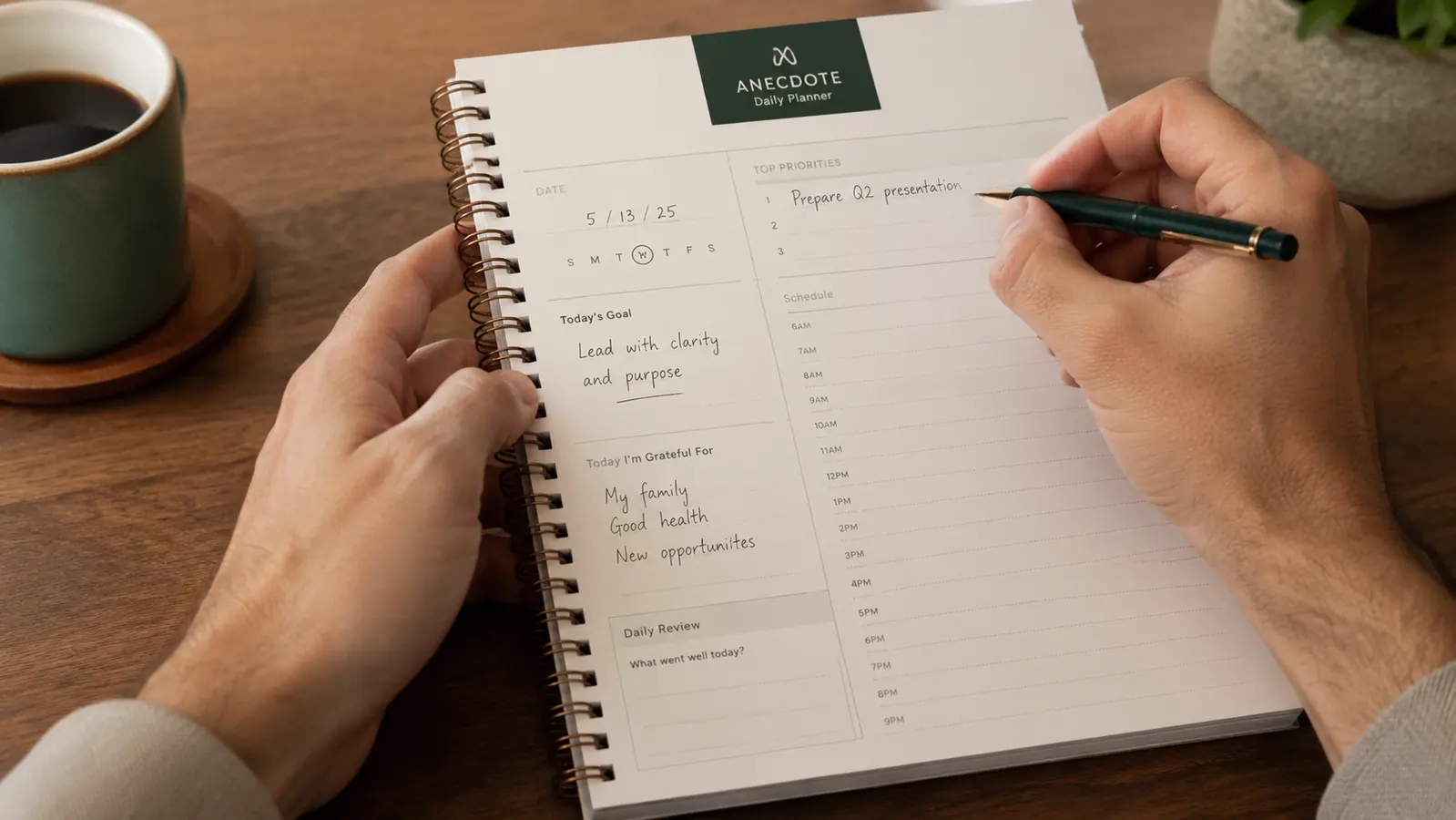
The planner is undated, so you start on whatever day you open it. That sounds minor but it matters. I have bought dated planners before and abandoned them by February because I missed a week of travel and the whole thing felt off. The Anecdote is 26 weeks of daily pages with a 2026-2027 calendar at the front, goals section up top, a structured daily layout with priorities, a notes column, and a short gratitude prompt at the bottom. The paper is thick enough that my pen does not bleed through. The wire binding lies flat. These are small things that add up to whether you actually use something.
The first week I used it, I completed nine meaningful tasks. Not inbox items, not busywork. Actual revenue-moving work: client deliverables, proposals sent, follow-up calls made. The week before I had probably done five or six of those, and I had felt completely overwhelmed. By week four I was consistently finishing twenty-two to twenty-eight of those same categories of tasks per week. That is where the word tripled comes from. I am not going to tell you the planner has magic in the paper. What it did was force me to decide every morning what three things absolutely had to get done before anything else. When you write that down by hand and look at it all day, you stop defaulting to low-effort tasks.
Writing your three priorities by hand and looking at them all day changes which tasks you actually start. That is the whole system. The planner just makes you do it every morning.
If your task list runs your day instead of you running it, this is the tool that fixes the gap.
The Anecdote Daily Planner costs less than a lunch out and holds 26 weeks of structured daily planning. Over 5,600 buyers rate it 4.4 out of 5. Check today's price on Amazon.
Amazon Check Today's Price on Amazon →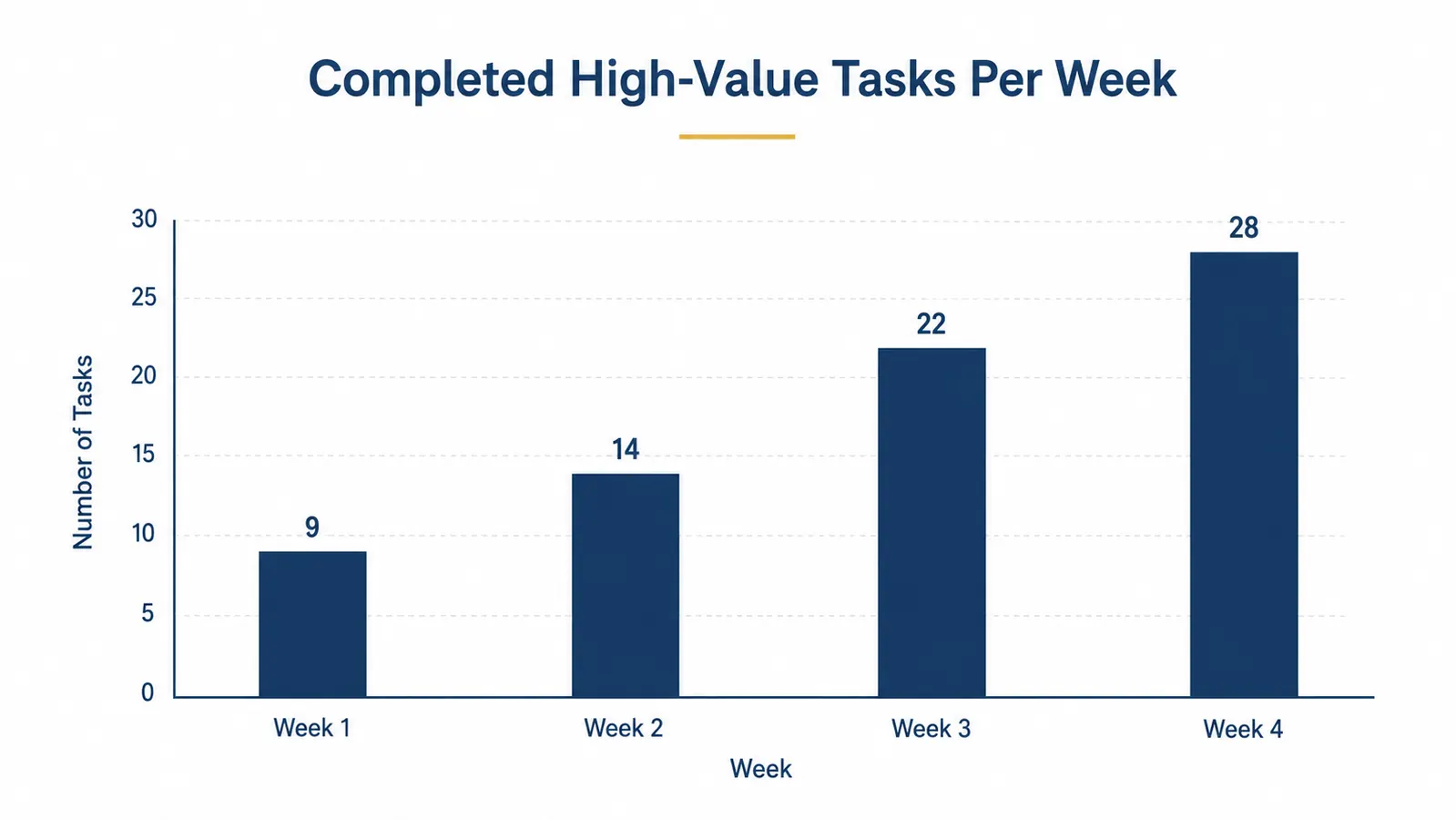
I want to be clear about what changed and what did not. My calendar was already organized. I already blocked deep work time. I was not wasting hours on social media. The gap was that I had no forcing function for choosing my highest-value work before the day took over. The planner's top priorities section is only three lines. That is not an accident. When you have three lines, you cannot pretend that twelve things are priorities. You have to make a real decision.
The gratitude prompt at the bottom of each page sounds soft but it is actually useful. After thirty-plus years of running businesses, I know that the founders who flame out fastest are the ones who lose sight of why they started. Writing one thing you are grateful for takes fifteen seconds and it is a subtle reminder that you are building something, not just surviving a task queue.

There is one honest limitation to name. If you run a business that requires heavy project management with dependencies across a team, this planner is not your project management software. It is a personal planning tool. I use it alongside a shared workspace for team tasks. The planner handles my own daily intentions. A collaboration tool handles the rest. Do not expect one wire-bound notebook to replace Asana. It was never supposed to.
I am now on my second Anecdote. I started the second one the day I filled the last page of the first. That is probably the most honest review I can give: I bought a replacement without hesitating.
What I Would Tell You If We Were Sitting at My Kitchen Table
If you are a solo founder or a small-team operator and you feel like you are busy all week but not actually moving the needle, I would tell you to stop adding apps and start writing things down. The Anecdote Daily Planner costs less than twenty dollars and it will outlast any productivity subscription you are paying for. The reason paper works better for daily planning is not nostalgia. It is because the friction of writing slows you down just enough to make a real decision instead of dragging a card across a column. You end up with fewer things on your list and more important ones. That is the trade you want. For a detailed look at how the layout holds up over a full twenty-six weeks, see the full long-term review. And if you want the unfiltered take on what the planner does not do well, the honest review covers exactly that.
Stop rebuilding your task list from memory every morning. One page, three priorities, done.
The Anecdote Daily Planner is a structured one-page-per-day notebook with 26 undated weeks, a 2026-2027 calendar, and space for goals, priorities, and gratitude. Rated 4.4 stars by more than 5,600 buyers. Check today's price on Amazon.
Amazon Check Today's Price on Amazon →